Spring: When Everything Old Can Become New

Spring is finally here! And that means it’s time for new beginnings. I’m excited because I’m ready for something new. It’s been an especially difficult winter on the east coast and for me personally, due not only to all the cold weather and snowstorms, but also some of those pesky storms of life.

The universe does have a way of nudging us toward a place we need to be, and that’s probably why I forced myself out of the house at the last minute to get to a yoga class today despite my inner protests (I have all this work to do; I’m tired; I can practice at home).

The teacher’s theme was, not surprisingly, spring-related. She spoke of doors and opening our hearts to new things; she asked us how we intended to greet the spring. Well, maybe that’s not exactly what she said, but you get the point.

Earlier, I’d been wondering why I wasn’t being strongly drawn to practice at any particular studio lately. I’ve been more or less bouncing from place to place for the last four or five years. Maybe the problem (if it’s even a problem) isn’t so much the studios out there as the plateau that I’ve reached within myself. I seem to be hearing (and saying and doing) the same thing over and over no matter where I go, and none of it is resonating the way it used to.

So it seemed this would be a good time for a new message, or so I was thinking as I unrolled my mat on this spring morning. I don’t mean an “out with the old, in with the new” kind of message. I mean I need to deepen my practice (my yoga practice, my spiritual practice, and my entire practice of life). Perhaps this has to do with the fact that I recently reached a milestone age. And I would like very much to be new.

Beginner’s Mind Makes Old Things New

So there I was in class waiting for something new. But there was really nothing new. Instead, the teacher invited us to experience the poses as if we’ve never done them before!

That was a powerful approach because this was in no way a beginner’s class. But then again, maybe it was. Maybe they all are (or could be). We do a lot of things in life so much by habit that it can become difficult to truly experience them anymore. And what happens? Sometimes, we get bored. And we start complaining about how we want to do something different or experience something new.

But what if we just started to think of the things we’re already doing in a different way?

This is especially challenging, I think, in our relationships. My husband reminds me of this all the time. We get so used to each other’s habits and ways of interacting that we think we can anticipate everything the other is going to say or do. Often, we can. But not always. And it’s usually when we can’t that we’ve missed something important.

So this little insight in yoga class was not exactly what I expected as an approach to this new season of spring. It’s better. Because the key to renewal may be simpler than we think. It may be that we don’t need to do anything new, just that we need to do old things in new ways.

So when you find yourself blaming your circumstances or routine for the lack of excitement in your life, try taking a deep breath and embracing whatever you’re doing right now. Do it as if you’ve never done it before. You may be surprised at how new old things can become!

It’s Okay to Say “God”

I’ve been a spiritual seeker for decades. I grew up in a religious (Catholic) family. I went to church every Sunday until I was in college. Soon after I graduated, I followed the path of many twenty-somethings disillusioned with religion. It wasn’t that I saw no value in the religion I grew up with; it was that I needed to go deeper.

God is an Experience

Around the time I took my first yoga class, I spent some time exploring Christian mysticism. I practiced centering prayer (similar to Eastern meditation) and read about the lives of Thomas Merton, St. John of the Cross, and other mystics. I was fascinated with “The Cloud of Unknowing” and a little booklet someone gave me called “The Hound of Heaven.”

The simple idea behind the mystic’s journey is God is within us and all around us. God will call us in subtle and not so subtle ways. And if we really want to understand our connection to God, we have to go within ourselves to experience it.

This inner knowing was a bit different from the traditions, rules, and practices I’d known as religion until then. To mystics, God is more of an experience than a being you can figure out by thinking, reading, and following a set of rules.

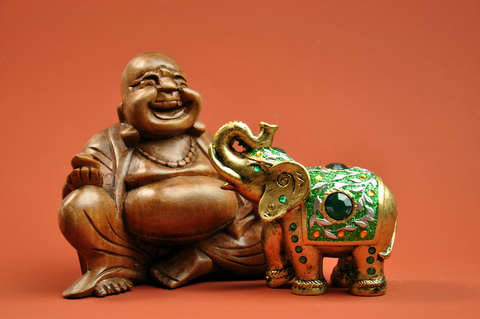
Buddha

As I continued to practice yoga and learn more about Eastern traditions, my understanding of spirituality and what it means to be a spiritual being expanded. I began to learn about Hinduism, then Buddhism, Taosim and other Eastern traditions.

I’m open to anything that brings me a genuine experience of “something greater than myself” (something which I believe I am a part of). I have less need to define it or analyze it or intellectualize it. I just try to experience it and be it.

But I’ve noticed something interesting as I’ve come to know many other spiritual seekers on a journey similar to mine. It seems the word “God” has become taboo in some circles. Some people with Christian roots seem eager to throw the baby (Jesus) out with the bath water.

If you’re a Christian (and even if you’re not), you probably understand Jesus as someone who came to show people the way to God. The path to God is the reason for any religion. Of course, there’s a difference between Christianity and other religions, but it’s not religion itself that is my point. It’s what the path of religion is leading you to.

As human beings, we need to start with a set of rules that point us in the right direction toward anything we want to understand. And in trying to understand spiritual matters, various groups have established different religions. Religion is important. It starts us on a path to God.

Rules, Rituals and Being Human

I hear a lot of people complain about Christianity because it supposedly encourages us to see ourselves as sinners. The problem may be a too-harsh definition of sin or they idea that sin makes us bad people.

Sin is whatever keeps us from connection with God.

It’s a fact of human life that we’re not always perfectly focused on our spiritual goals. But if enlightenment is important to us, we need a way to stay on the journey.

Is it really too many rules and rituals that cause people to cringe when they see a crucifix? Maybe, like the rules you learned for solving arithmetic equations or driving your car, you don’t have to be so rigid about them once you’ve understand what your goal is in the first place.

In other words, it’s the spirit of the law, not the law itself that matters. If you’re getting the answer, the steps you take may not be as important as you were led to believe when you first encountered the question. Just be honest about what’s happening. Are you really getting the answer, or is it just easier not to do your homework?

God will find you

I had a conversation about this recently, and my companion suggested that another reason people become disillusioned with Christianity is that they don’t like the idea of being eternally accountable to an invisible God.

So, here’s the thing. If there is an invisible God who is watching and taking note of our sins, we don’t have a choice in the matter. But that’s not something to worry about. There are probably eternal consequences to any choices we make in life. And eternity starts now. It’s not some final payment (or penalty) that will happen in the future.

The point I’m hoping to make is if you are truly honest about your spiritual life and your reasons for choosing your form of spiritual practice, you will find your way back to your source. God by any other name is still God.

(Don’t) Worry; Be Happy

You may remember the song, “Don’t Worry; Be Happy.” It’s a catchy tune and a fine message, usually. If you practice yoga, you have probably practiced being in the moment, which usually suggests a state of blissful trust in the universe. In other words, you’re without worry.

Sometimes worry is healthy

In the book “Aging as a Spiritual Practice,” author and Buddhist priest Lew Richmond writes about “healthy” worry. He describes the Buddhist concept of the “middle way,” comparing it to a lute string. In order to produce the best sound, a lute string must be in balance, that is, not too loose and not too tight.

My mom (who gave me the book to read) pointed this out once when we were discussing retirement. Realizing I had some concerns about having enough to live on in retirement, she said, “They say live in the moment, but how can you do that?”

Since I don’t spend a lot of time worrying about the future, I thought I knew the answer. “You have to be aware of the future and make plans for the future, but it’s probably not healthy to live in the future,” I suggested. It sounded right, at least from a yogi’s point of view.

The future depends on you

I guess the point is if you go through life in denial and truly live only in the moment, you will eventually encounter unpleasant moments. The unfortunate reality of having to save for retirement is one example.

I’ve encountered several people who have sworn to me the “universe” would provide for them, that things would happen “in time.” And I wasn’t too surprised to find out years later that they’d made no real progress toward their goals (if they had any goals to begin with).

On the other hand, if we spend our lives obsessing about numbers (living in the future) or stressed out over how to be sure our lives go according to plan, we’ll likely be miserable for many more moments than if we go through life with trust and awareness of how the present unfolds into the future.

And to be fair, some of those people who trusted the universe either got lucky or truly did have the universe on their side.

Our past does not disappear

Similarly, there’s no real way to be in the present if we have no connection to the past. Our past contributes to what is going on in our lives at this moment. Again, living in the past (brooding, regretting or wishing to return to “glory days”) is not useful. But recalling pleasant memories or appreciating the value of lessons we learned in childhood enriches each present moment, doesn’t it?

Learning to live in the present moment is (along with learning how to breathe) one of the best gifts I’ve received from my yoga practice. I could spend a lot of time feeling sad about things I’ve lost or fearing what will happen in the future, but thankfully, I don’t, at least not too often.

Keeping the Lute Strings in Balance

I try to spend just enough time in the past or future to keep my lute string balanced so I can make the best possible music. When I find myself tightening the string too much, I trust that I can take a step back and stop worrying, at least for a moment.

And when I realize I do need to work toward a goal for the future, I tighten that string just a bit more, but not so much that I forget to appreciate the gift of living in this beautiful moment and trusting I’ll make (mostly) the right choices as the future unfolds.

The past, present and future cannot really be separated. But maybe this is just a matter of perspective. No one can be in exactly the right place at all times; we need to learn how to make adjustments, to loosen and tighten that lute string as we move through a series of present moment. That’s the beautiful practice of the “middle way.”

Aging in Vertical Time

I’ve been thinking about growing older lately. In fact, I read a book about it. The book introduced me to an interesting concept called vertical time. I hadn’t really heard the term before, though as a yogi, I’m familiar with the concept.

I’m not (too) old, and I don’t feel old, but it’s hard to deny that I am aging. Getting older doesn’t have to be a bad thing, but like most people, I do sometimes feel uncomfortable about it.

What is it about growing older that causes this difficulty, and how can we use our concept of time to work around the idea that it’s a drag getting old?

Looking Back

As a yogi, I know the best place to be is in the present moment. But without the past and the future, there is no present. (Or is there? I’ll get to that later.)

I was talking with some friends about this and found myself blaming my anxiety about aging on the fact that I didn’t think I’d done “what I was supposed to do.”

One friend immediately countered, “Who says what you’re supposed to do?”

I thought about this a lot the next day, and it dawned on me that there is an answer to that question. I’ve often thought it would be easier to be middle-aged if I’d done the things I believe are expected of people by that stage in life (and I know those expectations are relative to the environment I live in).

But here’s the thing. If I’d done them, I doubt I’d be any happier.

If we spend our years listening intently for inner direction, which I think is the only real way to find our purpose or give life meaning, we don’t always get clear answers. The anxiety can become so great that we’re tempted to follow in the footsteps of those around us to silence the demons that tell us life is meaningless.

This is not to say it’s always a mistake to march to the same drum as those around you; just be sure you’re making an authentic choice when you choose that drum.

Past, Present, and Future

I grew up in a wonderful family. My parents were great, and I grew up wondering why I didn’t want my adult life to be just like theirs. At the same time, I hoped I eventually would want that life before it was too late, because I didn’t know what else to want.

I always felt there was something in store for me other than the life it seemed I was “supposed to” have. I can’t explain this well, but I’ve always been a little off track—not off my track, but off the track that runs through my experience.

Now I know the problem with getting older is not that I should have done what I didn’t do but that I struggle to accept that there’s no such thing as “should.”

Does it matter? I don’t know. The truth is something about life as a human on this planet isn’t quite right no matter what any of us does or doesn’t do.

When I was a 23-year-old student teacher in a high school English class, I mentioned to my mentor that I wasn’t sure if this was what I wanted to do. I thought I might continue in school and get a graduate degree in psychology instead (I eventually did). I’d already dabbled in a career as a technical writer with the English degree I’d earned three years earlier.

My mentor warned me I needed to stop trying new things—at 23—because I would need to have a pension and benefits in forty or years or so.

Part of me feared she was right; the other part didn’t really think much of that advice. I was still young. So, I continued trying more things and passing on things I perhaps “should” have done but knew would not make me happy.

The Spirituality of Aging

So back to the book I mentioned earlier. It’s called Aging as a Spiritual Practice. The author, Lewis Richmond, is a Buddhist priest. He refers to his book as “a contemplative guide to growing older and wiser.”

I’ve been drawn to contemplative practices for decades. Awareness and being in the moment are familiar concepts, and I’ve tried to practice these things all along. Still, there’s something in this book that helps solve the dilemma of aging for me. It’s the idea of vertical time.

Seriously, it’s awesome!

Vertical Time Has No Beginning or End

Richmond notes that when we think of the passing of time, we usually think of horizontal time, like the time on a timeline. Horizontal time starts somewhere in the past and will proceed into the future.

We grow physically older in horizontal time, opportunities pass us by in horizontal time, and it becomes “too late” in horizontal time.

But in truth, says Richmond, horizontal time may be an illusion or at least unique to our human condition.

“Unlike horizontal time, vertical time has no before and after. It is always just here. It doesn’t have room for memories or imagined failures,” Richmond says in Aging as a Spiritual Practice.

This is freeing if we accept it. If we recognize and choose to live in vertical time, what happened in the past and what may happen in the future are less important. The anxiety goes away, or at least decreases, and we’re free to live our best lives now.

Of course it’s not easy to live in vertical time, but it’s great to have this choice. We don’t have to be limited to time as a horizontal measure of our lives.

And with that, life is not about missed opportunities and worries about the future or even pride in successes or the belief that our lives will get better. We can choose to live fully in each moment, and even enjoy lives that have not been and may never be anything like we imagined.

I don’t know about you, but I love having this option! Can it make a difference in the way we age? I suppose only (vertical) time will tell.

That Locker Combination Dream: Listen and It Will Open

?????????????????????????????????????????????????????????????????????????????????????????????????????????????????????????

I had that locker combination dream again recently. You know, the one where you’re in school and you can’t get your locker open. I’ve had the locker combination dream dozens of times, always waking before I figure out how to open that door.

In the recent version of the dream, I was once again in school. It was the first day of class, but oddly, my fellow students and I were well into adulthood. In fact, some were former teachers and administrators in the schools of my youth who are well past retirement in real life.

My Locker Combination Dream

In the dream, I was first in my room in the home I grew up in trying to decide what to wear. Would I be comfortable in short sleeves or would it be chilly in school? While I was making what seemed like a very important decision, I also realized I was late. If I didn’t get going, I wouldn’t have time to get a cup of coffee to bring to class (I guess this was a reference to my college and graduate school days when I wouldn’t think of trying to get through class without coffee)!

Looking for the Locker

I got to school and discovered that not only did I not know my locker combination, but I wasn’t even sure where my locker was. “Not this again,” I thought (in the dream). I had carefully noted the location and the combination. How could I not know where to go or how to open the locker this time?

I was about to give up. I sat cross-legged on the floor with my head in my hands and cried. I’d been here so many times, and I just didn’t have the energy or desire to try to figure it out anymore.

After a few minutes, though, I realized I couldn’t continue to sit there on the floor. I forced myself up and looked around, though I doubted I’d find what I was looking for. I was on the third floor of the building, searching frantically for the locker. Still no luck.

Then a calm voice in my head reminded me, “It’s upstairs.” It wasn’t dramatic. It was just a quiet voice within. I followed some of the older people up one flight of stairs. Sure enough, my locker was there on the top floor of the building. “I think it’s near the science rooms,” the voice in my head suggested.

I found my locker (my name was on it). It was the first in its row, a few doors down from the science wing. I noticed this locker was bigger and nicer than the gray, steel lockers in earlier versions of the locker combination dream (and real life).

But there was still the problem of opening it. I still didn’t know the combination.

Listen for the Clicks

“Just listen for it,” the voice said. “These lockers are designed to be used by thousands of intelligent people. Just listen and you’ll be able to hear the combination.”

Trusting that voice, I slowly turned the knob clockwise until I heard a very subtle click; then I turned it counterclockwise, then clockwise again. It opened with the combination “19-3-12.” I began repeating the numbers to myself as I searched for a pen to write the combination down.

My inner voice spoke up again. “You won’t forget this. It’s 1932, except not 2 but 12.” I could remember that, I decided.

A man next to me had just opened his locker, and he was delirious with relief. We exchanged recollections of all the times we had to go to the office to ask for our combinations in the past in other schools. Who knew it was as easy as just listening for things to click?

The Locker Combination Dream is Resolved. Or is It?

Quickly, something else occurred to me. If all I had to do was listen for the clicks, then anyone else could come along and do the same. Anyone, if they listened closely, could open my locker and steal its contents.

As I thought about this, I noticed a woman over my left shoulder. She was clearly watching for me to write down my combination so she could copy it.

“It won’t work for her,” I heard. “The combination is for you alone.”

Confident, I smiled at the woman, and went about gathering the books and materials I would need for class. But now a few people were gathering around me asking me to help them open their lockers. I wasn’t sure how I could help them. They’d just have to do the same thing I did, I figured. I didn’t want to disappoint them, but I didn’t know how to explain this.

And that, this time, is when I woke up.

I do like to analyze dreams, but in this case, I’m not going to try to figure out why I woke up when I did. At least now I can open my own locker!

Coming of Age – Again

There are different times to come of age in life. There’s the coming of age from childhood to adolescence, from adolescence to adulthood, and one I’d like to think of as the coming of age from adulthood to enlightenment.

I’m going to say this coming of age happens in midlife, but I suppose it could happen any time. Spiritual teacher and Franciscan Richard Rohr calls it the “second half” of life, but that doesn’t mean we have an equal number of years in each part, nor does it mean we necessarily reach enlightenment in this human lifetime.

But there is a definite a shift. I began to notice it happening in my own life as I approached a “certain” age, though I still have a long way to go on this journey.

Dropping the Nonsense

At a certain point in life, it’s time to shed the nonsense — the insecurity that causes us to spend so much time caring what others think or what society is telling us we should want or feel or do.

It becomes time to stop blaming this or that experience or person for creating obstacles or stress or whatever it is that we’d like to believe is outside of us making us miserable, or for that matter happy.

We humans tend to lament the traumas and challenges of the past and things that “should not be” the way they are. It seems for some people, no matter how much time they spend on these “issues,” the issues remain.

To experience relief from this kind of suffering, we do need to admit our humanity. We need to stop pretending things don’t hurt or even traumatize us. We need to do the “work” of feeling our feelings, our pain, and our losses.

But we also need to get over it!

Will, Luck, or Grace? Getting Past the Past

I’m not sure there is any special way of getting over things we need to let go of. Is it an act of the will? Good luck? God’s grace? In my case, I’m beginning to suspect it’s just age. I was tired of my own lamenting a long time ago.

I still have my moments of regret and despair, of course. And I empathize with most of the whiners in my life, since I know we all need someone to witness our stories without judgment.

But the point of facing the pain or trauma of the past is to get past it. It’s not easy, but it is simple. There’s simply no way to complain our way out of doing what needs to be done to reach our goals.

Ever hear something like this: Well this guy got what I want but he didn’t have all of these issues and obstacles that I have. It’s been so hard for me, and I know he didn’t have the same challenges so I should just get what I want anyway because I really want it and if all this bad stuff didn’t happen to me, I’d have it. So I should have it even though I see myself as a poor pathetic loser with bad luck. And if I just got what I wanted I wouldn’t see myself that way anymore.

Eventually, we see this line of thinking doesn’t work. Now what?

If You Want to Feel Better, Change Your Mind

Most of our problems are in our minds. I don’t mean they’re imaginary, I mean we create them with our thoughts. Change happens when thinking changes.

Sometimes, this means realizing that getting what you want isn’t so important. Sometimes it means changing your belief about the obstacles in your way. You might even start to want the things you get. And perhaps you’ll even begin to realize how much you already have!

And then something even more amazing could happen. You’ll begin to see yourself as a beloved expression of creation. You’ll see your connection to all that is and realize you are enough.

The point is if you live long enough, you will likely change your ideas about what life should be like so you can appreciate what it is like.

And if you’re afraid you won’t be able to handle all the newfound joy and inner peace you might find if you decide to look for it, don’t worry. There will be plenty of opportunities for despair and disappointment should you find joy isn’t really your thing after all.

Jack of all Trades; Master of a Few

A day in my life can pretty scattered, even in terms of writing career. It’s funny and wild at the same time. Luckily, I’m pretty good at multi-tasking!

A typical day will see me editing some technical reports about laser printers and other office devices. I navigate my way through the world of technology to load reports or calculate data that clarifies how one of these machines would run at a “slightly” different speed in Europe (where the standard paper sizes are different than those in the US).

After that, I might settle into some research and writing about nutrition, yoga, or cats for a writing client. I’ve written about subjects as diverse as marketing, insurance, wine, spa treatments and hypnosis. Then after a break for grocery shopping or yoga class, I start thinking about my personal writing — my blog or that book I’ve been trying to write.

Learning to Trust the Process

Most of the time I wonder what I’m doing. I wonder, but I don’t worry about it (anymore) because I’ve learned to trust the process.

I’ve had a few dreams that seem unrelated, but they connect in some way. There’s my writing, of course, my former lives as a nutritionist, a teacher and a psychology grad student, and my longstanding dream of operating a wellness center.

People would come to my wellness center mostly to do yoga and talk about truth and consciousness, but maybe also to learn about nutrition and other ways to improve their physical, mental and spiritual well-being.

I’ve had this dream for nearly 20 years, but so far the closest I’ve come is my own yoga practice and all the writing I do on related topics.

Going With the Flow and Trying Things Out

A friend of mine who is very much into the idea of going with the flow of life says the trick to understanding how the universe works and what we’re here for is to trust that we don’t need to know where we’re going. In fact, he says we don’t even need to know what we want (nice, if like him, you’re a successful artist and being a successful artist is what you have always wanted to be).

While I’m not necessarily comfortable with a “go with the flow” philosophy, I’ve mostly lived by one, simply because I don’t really have another choice.

Back in the day when I was still trying to figure out what kind of work I wanted to do, someone suggested I might not be finding work that was satisfying because I didn’t know what I wanted. Many new age gurus tell us to focus on our dreams and that we can create what we envision. But it always seemed more practical to me to just try out a bunch of things and see what I like (and what I don’t like).

Maybe this is just me. Like I said, what choice did have I had? You can’t force yourself to know what you want just because knowing is easier or more convenient.

At least I usually know what I don’t want!

Finding A Way That Works

And guess what I discovered? My way works too. There are lots of things I really like having in my life despite the fact that I didn’t necessarily know I wanted them. And there are lots of things I enjoy doing despite the fact that I didn’t necessarily set out to do them.

For example, I really do like crunching numbers for a while and then trotting off to clear my chakras!

Time Travel and The Reality of Now

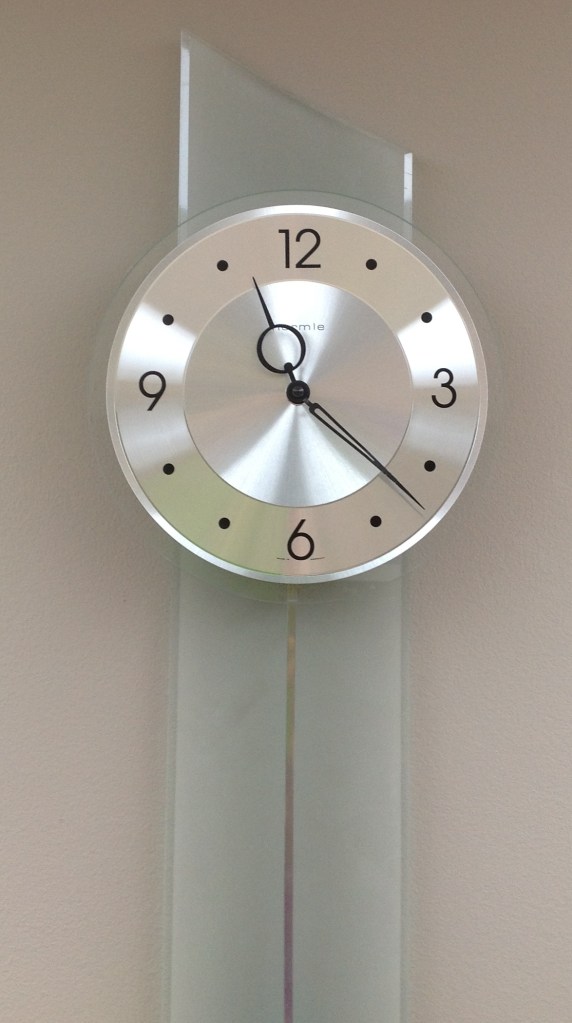
I’ve been wondering lately if there’s really such a thing as time. I say this because, for one thing, I realize it’s now, just like it’s always been. But more significantly, I’ve recently done some time traveling. Not the kind you see in the movies but the kind you do in your mind.

You see, my mom gave me the journal she kept when my siblings and I were kids. She thought it would be a great idea if I typed it up “for posterity” (we’ve always had trouble reading Mom’s handwriting; she can’t always read it herself).

I agreed to this task, though I thought it would take me to get through her writings. It took only a few days (hours really).

Moving Through Time

The time travel started in the late sixties, with the first comments she made about my sister and me (then toddlers). By the time I finished typing, I had reached the end of my first year of college. But all along the way, I was right there in whatever year I was transcribing on.

I relived things I don’t remember, like my first words, the day my little brother was brought home from the hospital, and the time my sister locked our Mom out of the house when she went outside to throw out the trash!

I also relived things I do remember, like waiting for days for my cat to come home after he’d wandered off (more than once), going to middle school, getting my driver’s license, and the ear infection that led me to lose most of the hearing in my right ear.

For days after typing these “notes,” I felt as if I had never left my childhood home. I felt like my parents were still in their forties and my grandparents were still on Earth.

At the same time, I felt like I was still an adolescent and a young adult. Then I got the idea of adding old pictures to the document, and the time travel became even more intense.

I had a similar experience with time travel when I joined began reconnecting with people from grade school, high school, college, past jobs, and recent yoga classes on social media. It was if it was simultaneously 1970, 1978, 1985, 1995 and 2007. Weird. Really.

Time is How the Universe Watches Itself Unravel

I do wonder about the significance of time. Physicists say time is a measure of entropy. That is, it’s basically watching how messed up things get as it goes on. Apparently, at the beginning of time, things were not as messy as they are now.

According to physicist Sean Carroll, time works much differently at the microscopic level. At that level, there apparently is no “arrow of time,” meaning time is no longer linear.

“If you do believe that the fundamental laws of physics are reversible then what you believe really is that information is conserved. So if you knew everything about the universe at one precise moment in time, in principle, you could turn a little crank and predict what the future would be like and reconstruct what the past would be like,” Carroll says.

At Some Point, We No Longer Need Time

No, I don’t really understand that, but it supposedly means if we knew everything about ourselves and the universe, there would no longer be “free will.” In other words, you could say if you knew everything about yourself and the universe, you would be God or creation or whatever it is you are currently unable to understand. And in that case, free will would no longer be necessary.

The reality of time (and no time) is a lot to wrap our heads around, which is probably why we don’t. We’ll probably never know enough to see the future and we never be able to reconstruct the past — unless we read our mothers’ journals or join old friends on social media.

Next Newer Entries

Maria is a health and wellness writer and certified yoga instructor with a background in education, psychology, and nutrition. She has written hundreds of pages of content for clients in health-related fields, particularly those specializing in yoga, natural medicine, nutrition, psychology, and spiritual health and healing. She is also the author of "Yoga Circles, a Guide for Creating Community of the Mat." In addition to writing, Maria has worked as a nutritionist, teacher, and technical/nonfiction editor. To learn more about her writing, visit www.wellbeingwriter.net.