Om and Dharma: Why Yoga is so Much More than a Physical Practice

A few days ago, I attended a challenging vinyasa yoga class at a studio I’d never been to before. It was one of those classes where once or twice I say to myself, “She must be kidding” when the teacher directs us into a pose that is just not going to happen for my body that day.

Still, I felt great after the class, despite thinking at one point that my thighs were going to explode during one of the vinyasa sequences. But as the class wound to a close and the teacher imparted a short final blessing, I realized that there were two things this class did not include that I missed: a dharma talk and chanting.

Yoga Wisdom and the Sound of the Universe

Most of the classes I attend over the last few years begin with a short discussion of a yoga-related topic or a relevant reading. These classes also begin and end with chanting the sacred sound of “om.”

Don’t get me wrong, it’s possible to have a wonderful class without either of those elements. Sometimes I want a shorter, “mostly asana” class, and I’d probably go to fewer classes overall if I didn’t have the option to take a shorter class now and then. It’s just that I noticed there was something missing in this case, and I was grateful I knew it was missing. In other words, I’m grateful to teachers who include some food for the mind and soul as well as physical movement for the body.

Dharma and Om

So what are the benefits of those dharma and om parts of yoga class?

What is the purpose of life?

The answer is probably different for everyone. Personally, I find a lot of inspiration for my writing in the themes my yoga teachers speak about in class. Speaking briefly to the class is also a way to connect, even though time doesn’t usually allow for an actual conversation. (I often think it would be nice to have an optional discussion at the end of some classes.)

Chanting is another way everyone in the room can connect. And just as in life, sometimes there is a wonderful harmony as people join their voices to “om” while other times there is more of a cacophonous clash of sound.

Either way, yoga and chanting go hand in hand in my mind, and I notice when the chant is missing.

Body, Mind and Spirit

Once in a while (though truly not often), I come across a person who does not like yoga. I don’t mean a person who has a preferred style of practice or who has not yet practiced long enough to fall in love, but someone who truly does not like anything about the practice.

Most of the time, this is a person who thinks of yoga as a type of fitness activity, like running on a treadmill or playing tennis. It’s tempting to engage such a person in a conversation until I have convinced him or her there is always something to love about yoga and he or she has probably just not found the right style or teacher yet. Instead, I usually decide it’s one of those times for letting go.

The point I’d make if I did engage the person is while there are many wonderful physical benefits to yoga, we come to class not only to tone our bodies but also to open our spirits and still our minds. Many of us come to connect with like-minded people as well.

Maybe my own practice will speak for itself, and someday, everyone will love yoga. If not, I suppose that’s okay too.

Aging in Vertical Time

I’ve been thinking about growing older lately. In fact, I read a book about it. The book introduced me to an interesting concept called vertical time. I hadn’t really heard the term before, though as a yogi, I’m familiar with the concept.

I’m not (too) old, and I don’t feel old, but it’s hard to deny that I am aging. Getting older doesn’t have to be a bad thing, but like most people, I do sometimes feel uncomfortable about it.

What is it about growing older that causes this difficulty, and how can we use our concept of time to work around the idea that it’s a drag getting old?

Looking Back

As a yogi, I know the best place to be is in the present moment. But without the past and the future, there is no present. (Or is there? I’ll get to that later.)

I was talking with some friends about this and found myself blaming my anxiety about aging on the fact that I didn’t think I’d done “what I was supposed to do.”

One friend immediately countered, “Who says what you’re supposed to do?”

I thought about this a lot the next day, and it dawned on me that there is an answer to that question. I’ve often thought it would be easier to be middle-aged if I’d done the things I believe are expected of people by that stage in life (and I know those expectations are relative to the environment I live in).

But here’s the thing. If I’d done them, I doubt I’d be any happier.

If we spend our years listening intently for inner direction, which I think is the only real way to find our purpose or give life meaning, we don’t always get clear answers. The anxiety can become so great that we’re tempted to follow in the footsteps of those around us to silence the demons that tell us life is meaningless.

This is not to say it’s always a mistake to march to the same drum as those around you; just be sure you’re making an authentic choice when you choose that drum.

Past, Present, and Future

I grew up in a wonderful family. My parents were great, and I grew up wondering why I didn’t want my adult life to be just like theirs. At the same time, I hoped I eventually would want that life before it was too late, because I didn’t know what else to want.

I always felt there was something in store for me other than the life it seemed I was “supposed to” have. I can’t explain this well, but I’ve always been a little off track—not off my track, but off the track that runs through my experience.

Now I know the problem with getting older is not that I should have done what I didn’t do but that I struggle to accept that there’s no such thing as “should.”

Does it matter? I don’t know. The truth is something about life as a human on this planet isn’t quite right no matter what any of us does or doesn’t do.

When I was a 23-year-old student teacher in a high school English class, I mentioned to my mentor that I wasn’t sure if this was what I wanted to do. I thought I might continue in school and get a graduate degree in psychology instead (I eventually did). I’d already dabbled in a career as a technical writer with the English degree I’d earned three years earlier.

My mentor warned me I needed to stop trying new things—at 23—because I would need to have a pension and benefits in forty or years or so.

Part of me feared she was right; the other part didn’t really think much of that advice. I was still young. So, I continued trying more things and passing on things I perhaps “should” have done but knew would not make me happy.

The Spirituality of Aging

So back to the book I mentioned earlier. It’s called Aging as a Spiritual Practice. The author, Lewis Richmond, is a Buddhist priest. He refers to his book as “a contemplative guide to growing older and wiser.”

I’ve been drawn to contemplative practices for decades. Awareness and being in the moment are familiar concepts, and I’ve tried to practice these things all along. Still, there’s something in this book that helps solve the dilemma of aging for me. It’s the idea of vertical time.

Seriously, it’s awesome!

Vertical Time Has No Beginning or End

Richmond notes that when we think of the passing of time, we usually think of horizontal time, like the time on a timeline. Horizontal time starts somewhere in the past and will proceed into the future.

We grow physically older in horizontal time, opportunities pass us by in horizontal time, and it becomes “too late” in horizontal time.

But in truth, says Richmond, horizontal time may be an illusion or at least unique to our human condition.

“Unlike horizontal time, vertical time has no before and after. It is always just here. It doesn’t have room for memories or imagined failures,” Richmond says in Aging as a Spiritual Practice.

This is freeing if we accept it. If we recognize and choose to live in vertical time, what happened in the past and what may happen in the future are less important. The anxiety goes away, or at least decreases, and we’re free to live our best lives now.

Of course it’s not easy to live in vertical time, but it’s great to have this choice. We don’t have to be limited to time as a horizontal measure of our lives.

And with that, life is not about missed opportunities and worries about the future or even pride in successes or the belief that our lives will get better. We can choose to live fully in each moment, and even enjoy lives that have not been and may never be anything like we imagined.

I don’t know about you, but I love having this option! Can it make a difference in the way we age? I suppose only (vertical) time will tell.

That Locker Combination Dream: Listen and It Will Open

?????????????????????????????????????????????????????????????????????????????????????????????????????????????????????????

I had that locker combination dream again recently. You know, the one where you’re in school and you can’t get your locker open. I’ve had the locker combination dream dozens of times, always waking before I figure out how to open that door.

In the recent version of the dream, I was once again in school. It was the first day of class, but oddly, my fellow students and I were well into adulthood. In fact, some were former teachers and administrators in the schools of my youth who are well past retirement in real life.

My Locker Combination Dream

In the dream, I was first in my room in the home I grew up in trying to decide what to wear. Would I be comfortable in short sleeves or would it be chilly in school? While I was making what seemed like a very important decision, I also realized I was late. If I didn’t get going, I wouldn’t have time to get a cup of coffee to bring to class (I guess this was a reference to my college and graduate school days when I wouldn’t think of trying to get through class without coffee)!

Looking for the Locker

I got to school and discovered that not only did I not know my locker combination, but I wasn’t even sure where my locker was. “Not this again,” I thought (in the dream). I had carefully noted the location and the combination. How could I not know where to go or how to open the locker this time?

I was about to give up. I sat cross-legged on the floor with my head in my hands and cried. I’d been here so many times, and I just didn’t have the energy or desire to try to figure it out anymore.

After a few minutes, though, I realized I couldn’t continue to sit there on the floor. I forced myself up and looked around, though I doubted I’d find what I was looking for. I was on the third floor of the building, searching frantically for the locker. Still no luck.

Then a calm voice in my head reminded me, “It’s upstairs.” It wasn’t dramatic. It was just a quiet voice within. I followed some of the older people up one flight of stairs. Sure enough, my locker was there on the top floor of the building. “I think it’s near the science rooms,” the voice in my head suggested.

I found my locker (my name was on it). It was the first in its row, a few doors down from the science wing. I noticed this locker was bigger and nicer than the gray, steel lockers in earlier versions of the locker combination dream (and real life).

But there was still the problem of opening it. I still didn’t know the combination.

Listen for the Clicks

“Just listen for it,” the voice said. “These lockers are designed to be used by thousands of intelligent people. Just listen and you’ll be able to hear the combination.”

Trusting that voice, I slowly turned the knob clockwise until I heard a very subtle click; then I turned it counterclockwise, then clockwise again. It opened with the combination “19-3-12.” I began repeating the numbers to myself as I searched for a pen to write the combination down.

My inner voice spoke up again. “You won’t forget this. It’s 1932, except not 2 but 12.” I could remember that, I decided.

A man next to me had just opened his locker, and he was delirious with relief. We exchanged recollections of all the times we had to go to the office to ask for our combinations in the past in other schools. Who knew it was as easy as just listening for things to click?

The Locker Combination Dream is Resolved. Or is It?

Quickly, something else occurred to me. If all I had to do was listen for the clicks, then anyone else could come along and do the same. Anyone, if they listened closely, could open my locker and steal its contents.

As I thought about this, I noticed a woman over my left shoulder. She was clearly watching for me to write down my combination so she could copy it.

“It won’t work for her,” I heard. “The combination is for you alone.”

Confident, I smiled at the woman, and went about gathering the books and materials I would need for class. But now a few people were gathering around me asking me to help them open their lockers. I wasn’t sure how I could help them. They’d just have to do the same thing I did, I figured. I didn’t want to disappoint them, but I didn’t know how to explain this.

And that, this time, is when I woke up.

I do like to analyze dreams, but in this case, I’m not going to try to figure out why I woke up when I did. At least now I can open my own locker!

Poetry, Frost and The Road Not Taken

Writing Poetry

This week, I decided to enroll in a poetry writing class. I haven’t done any kind of creative writing in almost ten years, and I’ve written only a handful of poems in my life (all of them when I was in college). I thought tapping into this new creative outlet would be fun and challenging. I got the idea in yoga class (of course) when my teacher read some poems.

There are essays to write in this class, and the first was to describe a favorite poet who wrote at least 40 years ago and tell how we imagined this poet would influence the kinds of poems we write.

Well, I don’t really have a favorite poet, so I focused the essay on one of my favorites poems, “The Road Not Taken,” by Robert Frost.

Two Roads Diverge and I Write An Essay

I suppose I’m not alone in admiring Frost. I like that his poetry shows how something that at first might seem very simple is really quite profound.

The wonderful thing about this particular poem is there are so many possibilities for the journey it describes. I suspect a lot of people read it and conclude that taking the road less traveled was the right choice, because it led to some wonderful experiences that would not have happened otherwise.

But we aren’t really told what happens to the writer on that road less traveled. Reading and absorbing a poem like this opens up a world of ideas about the journey of life.

Any one of us may think we can explain our present circumstances based on a choice, or perhaps a set of choices made in the past. But can we know with certainty that it’s better to be unique and go against the status quo?

Yet something inside us (at least something inside me) romanticizes the possibilities that traveling in a different direction might open us to.

Maybe our fascination with the road less traveled is due to the predictability we imagine as a result of taking more traveled paths. Once the path is beaten, so to speak, we are more likely to know where it leads simply because more people can tell us what to expect.

If you look at life that way, you realize most new discoveries and advances come only when people take risks and choose less traveled roads.

I know I’m not addressing the topic of describing a favorite poet, but I think the kind of poetry I would like to write are in line with my ideas about Frost’s work.

My preference is always to say more with fewer words, which may be what draws me to poetry in the first place. Words are limiting, but they are still the best tools we have for communicating.

Truly artistic poets can give great power to few words. The shorter poems usually speak to me the loudest.

Essential Oils for Your Drinking Water

oils for water

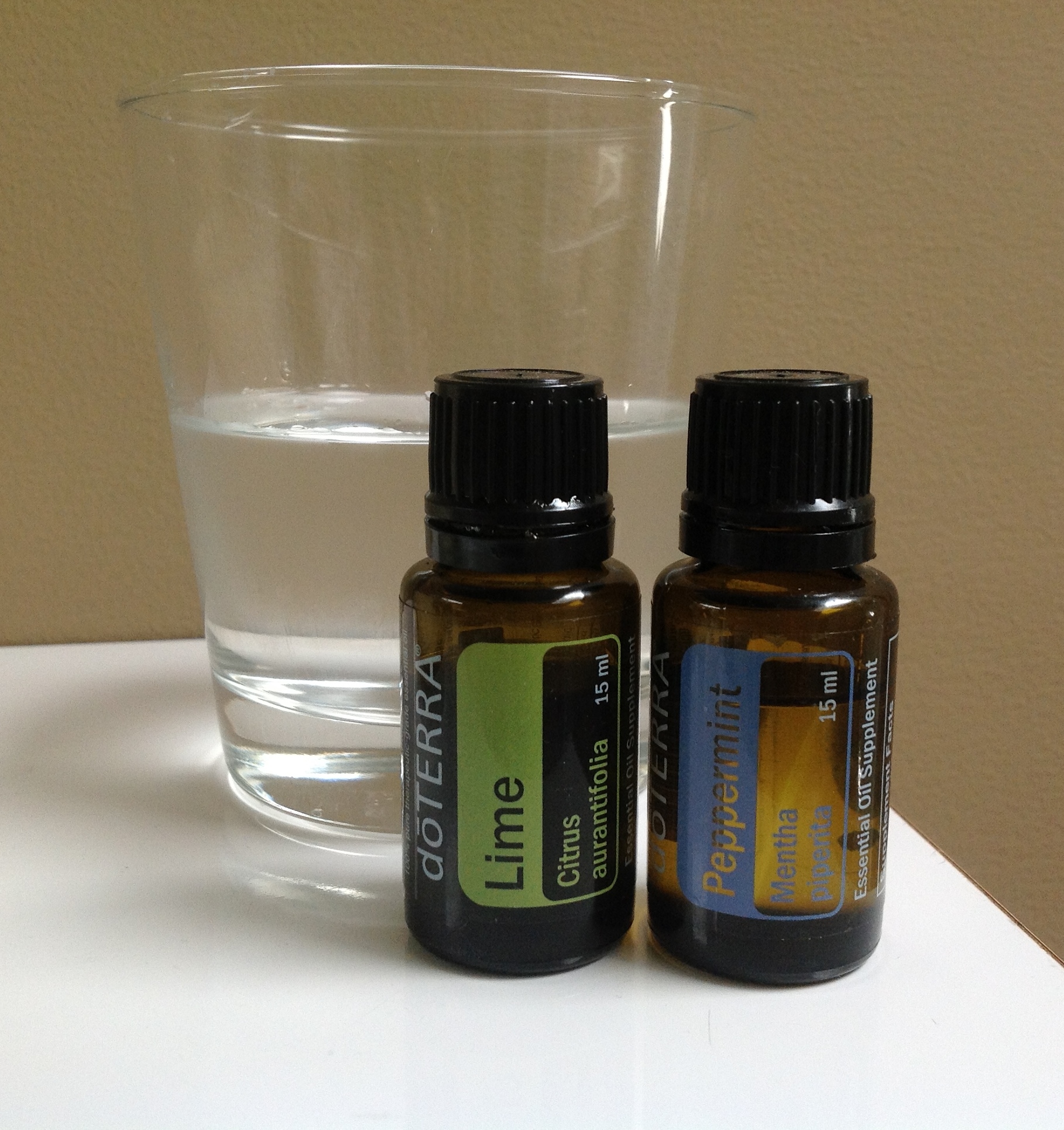
Recently, a knowledgeable essential oil practitioner recommended a refreshing way to drink water. It’s simple: add a drop of peppermint essential oil and a drop of lemon essential oil to a full glass and enjoy.

Before I read this tip, I hadn’t found a blend of essential oils I liked in my drinking water, but I tried this, loved it, and have been drinking it ever since. If you’ve been looking for a refreshing way to drink water, this might be the blend for you too!

Since I didn’t have any lemon essential oil the first time I tried the blend, I used lime instead. Whether you use lime or lemon, the combination of citrus and peppermint really hits the spot! It’s not only refreshing but it’s also energizing, and you’ll feel the effects for quite a while after you drink it!

Beyond the great taste, you’ll get some wonderful health benefits from both the peppermint and the lemon (or lime).

Peppermint Essential Oil Benefits

Peppermint oil is great for digestion and for headaches. If you’re prone to tension headaches, you may know that drinking water and staying hydrated will help. Adding a few drops of peppermint oil to your water will help even more!

Peppermint’s digestive benefits go beyond calming an upset stomach. It will also help curb your appetite, especially when combined with lime, lemon or other citrus oils. So if you’re trying to lose weight or if you want to keep your stomach from grumbling in between meals, carrying a water bottle with this tasty combination of peppermint and citrus will keep you hydrated and happy all day!

Lemon Essential Oil Benefits

Lemon and other citrus essential oils are excellent natural detoxifiers. This is one reason you’ll often see lemons or limes in drinking water, and holistic health care providers often recommended drinking water with lemon or lime every day.

Lemon is also great for colds, flu and respiratory problems, so drinking water with a few drops of lemon essential oil will help you breathe better if you’re experiencing any kind of respiratory issue. Lemon essential oil will also boost your immune system and help you recover from any kind of infection faster.

How to choose Essential Oils for your Drinking Water

The most important thing to keep in mind when choosing essential oils for drinking water is that the oils you choose are pure, therapeutic grade and suitable for internal use.

If you’re not sure about the quality of an oil, check with the company that makes it and ask if it’s safe for internal use. Oils vary in quality, so you’ll want to be sure to choose a product that is not only safe to use internally but is tasty as well.

Ylang Ylang Essential Oil Benefits for Calming Mind and Body

ylang ylang flowers
ylang ylang flowers

In a recent post about natural ways to get a good night’s sleep, I mentioned ylang ylang essential oil. I’ve been diffusing this oil every night lately, and I’ve noticed I sleep better when I do. In fact, ylang ylang is quickly become one of my favorite oils for any situation that requires calm!

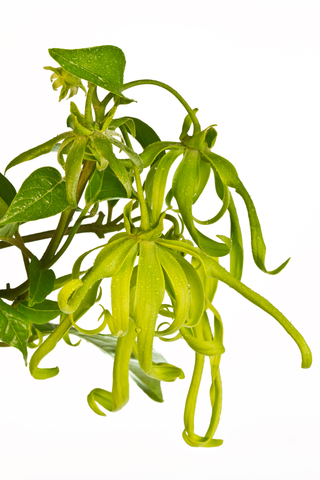
Ylang ylang is a fascinating gift of nature. The oil is steam distilled from the flowers of the ylang ylang tree, which is native to rain forest climates. The sight of the tree itself will make you feel calm and relaxed. It has small unusually-shaped flowers that blend beautifully with the leaves of the tree. The flowers have a very sweet, almost fruity floral scent.

Ylang Ylang Distillation

When ylang ylang essential oil is produced, the flowers are distilled in three steps. That’s why you might notice your bottle of ylang ylang essential oil has a Roman numeral following the name. An oil labeled “ylang ylang I” is the result of only the first distillation of the flowers. The most effective type of ylang ylang is labeled “ylang ylang complete,” which means it contains oil from all three distillations.

Ylang Ylang Benefits

Ylang ylang essential oil is used in aromatherapy for its soothing and relaxing qualities. It helps to calm the nervous system, so it’s excellent as a remedy for insomnia. It’s also a good choice when you’re anxious, angry or stressed. The uplifting aroma of ylang ylang can help lift a low mood in people with depression. Likewise, it can boost libido, making it effective as an aphrodisiac. The oil’s relaxing properties may also help lower blood pressure.

For those interested in chakra balancing, ylang ylang essential oil is a good tonic for the third (solar plexus) chakra. This makes sense, since the third chakra is our center of creativity and personal power, qualities that shine when we’re not tense, anxious or depressed.

Blending ylang ylang

If you have an essential oil blend intended for any kind of calming effect, check the label. It’s likely that ylang ylang is included in the mix. Ylang ylang blends well with cedarwood, bergamot, lavender and grapefruit.

So if you’ve never heard of ylang ylang, or if you just haven’t tried it yet, be look for it next time you need an essential oil to help you relax!

Ayurvedic Spices to Balance Vata Dosha

Until recently, I used few herbs or spices other than the basics I grew up with (salt, pepper, and, like every good Italian, basil and oregano). I had no idea what I was missing!

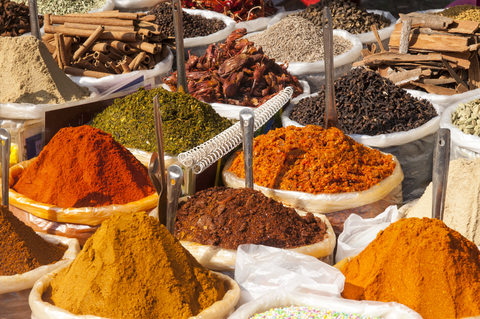
Now that I’m learning more about the benefits of spices for health (and for making food tastier), I have many favorites (basil and oregano still among them). I also love a blend of vata-balancing Ayurvedic spices I now use every time I make a salad. It’s a mix of cardamom, cumin, ginger, cinnamon, nutmeg, asafetida, and salt.

According to Ayurveda, a balanced diet should consist of foods that contain all six tastes (sweet, sour, salty, pungent, bitter and astringent). A few years ago, I found a product called Organic Surya Spice Blend from the Chopra Center. The blend contains the six tastes I listed above.

Balancing Vata Dosha

If you’re not familiar with the doshas, here’s a quick overview. In Ayurvedic (Indian) medicine, each person has a unique constitution that is one (or in some cases a combination) of three types, called doshas. The three doshas are vata, pitta and kapha.

Since my dosha is vata, the spices for balancing vata became a staple in my kitchen right away. It’s delicious in salads (also in soups, as an ingredient in dips, and for seasoning fish), but beyond that, the properties of each spice have unique health benefits for vata types.

Balancing vata energy is especially important now that it’s “Vata season” (autumn). Vata is an airy, spacey kind of energy, so these grounding spices are especially beneficial.

Spices for Vata Dosha

Here’s a rundown of each ingredient in the vata dosha spice blend.

Asafetida, the one ingredient on this list you may not have heard of before, is so-named for its strong odor. It also has the nickname “devil’s dung.” Sound good so far? I didn’t think so either until I learned more about it. This sour herb is great for the digestive system, and it also reduces inflammation throughout the body.

Cardamom is a warm spice from India. Those with a vata constitution do well with warmer foods and can also benefit from cardamom’s cleansing and detoxifying properties. It’s a peppery spice classified as bitter, though it has a very pleasant taste. Cardamom is one of the ingredients in curry.

Cinnamon is another warming spice, and it’s one of my favorites. Since vata people (among others) do better avoiding sugar, the sweetness of cinnamon is a great substitute.

Cumin, a favorite among Indian cooks, is a bitter spice with strong antibacterial properties. It’s also another spice that can help balance the digestive system.

Ginger, the astringent in the mix, is great for the digestive troubles that vata people often experience. It’s also known to be an uplifting spice (maybe that’s why it’s used to make those yummy holiday cookies).

Nutmeg is often found alongside ginger and cinnamon in recipes that hint of the warmth of autumn evenings by the fire. This spice adds a pungent flavor to the blend.

Salt may not seem like a healing spice, but when blended properly among the other tastes, it adds just the right balance and helps bring out the flavors of the other spices.

The flavors in this blend really do come together nicely. So, if you’re intrigued by the idea of using more spices to add flavor and health benefits to your food but you don’t know where to start, try a blend like this. There are also blends available for the other two doshas. You can find them all in the Chopra Center store, or you can buy the individual spices and experiment with combining them yourself!

Bad Foods: Why Some Foods Probably Should Not Be Part of Your Diet

Many people follow diets that do not allow this or that kind of food. Some avoid gluten, while others forego meat. For others, refined carbohydrates are bad foods.

Conversely, many people eat whatever they want. Many of these people use catchphrases like, “There are no bad foods.” You might also hear things like “all things in moderation” from those who do not believe there are bad foods. So, what’s the truth?

Are There Bad Foods?

After more than twenty years of studying nutrition, I understand the limitations of restrictive diets. I understand why some people say there are no bad foods. But my belief is there are bad foods. What I mean to say is there are foods that are not good for you!

I can’t give you a list of those foods. That’s because what is not good for you depends on your uniqueness. We’re not all the same physically, emotionally, or biochemically. So a food that does no harm to one person might harm another.

Worse, in the case of some allergies, eating a certain food could be deadly. For an obvious example, consider nuts. They are healthy for many people. For those with severe nut allergies, eating nuts can have catastrophic consequences.

A Better Definition of Good and Bad Food

In a sense, I agree there are no bad foods, but I agree with a caveat. My definition of food may be narrower than most. To me, food is a substance that is nourishing. To understand what I’m getting at, think beyond what you eat and consider a phrase like food for the soul.

The idea of nourishment is simple. A food is not nourishing because it tastes good or because it’s filling or because everyone else at the party is eating it. It’s nourishing because it is good for you. Something positive happens to your health when you eat it. 

If I have a nut allergy, a nut is not food to me. If I’m diabetic, perhaps I shouldn’t think of sugar as food. If my gut goes haywire when I eat wheat…you get the picture!

Food for Overall Well-being

I have not eaten red meat or poultry in decades. I wrote about why in another post. At this point, if I were to eat a single hamburger, I doubt anything “bad” would happen to my body. But for me (maybe just me), something negative would happen to my spirit.

Based on what I’ve learned about factory farming and how it abuses animals and the environment, eating meat from a grain-fed cow slaughtered in a factory would not be a nourishing experience to me. If I thought my body needed meat for physical health (I don’t), humanely raised grass-fed beef might be an option. This is one personal dietary choice. There are many others. I’m sure you have your own.

Everyone is Different

The truth about food as I see it is no one diet is appropriate for everyone. But to make choices about food, we must know how our bodies use it. We must also know how it is produced.

I remember an excellent article by a naturopathic physician who took the idea of bad foods to task. In the article, she stated she eats “anything she wants.” What she didn’t really get into, though, is that her passion for health and her education about food give her the incentive to make choices that are good for her.

There are certainly people who believe feeding a child a hot dog on a white-bread bun and a soda for lunch every day is healthy. I’m fairly confident it’s not.

The One Question to Ask About Food

If you’ve found a way of eating that works for you, chances are you had different beliefs before you found that diet. And you may change your ideas about food as time goes on. I’d need to spend a good amount of time with you before I could suggest what might be good or bad for you.

I think there’s only one question to ask about food, though the answer to that question may not be so simple. The question is, “Does this make me healthier?” And when I talk about health, I mean not only physical health, but other aspects of your well-being too.

Over time, if you have a good relationship with all aspects of yourself and with food in general, knowing what is good for you becomes intuitive. Only you know when a piece of chocolate cake will do your body no harm and when it will it will hurt you. You may need to expand your definition of food to make this decision well.

This works with almost every food you can think of. Sure there are some foods (organic berries come to mind) that are good for almost everyone. There are others (like blue cotton candy) that can be called food only with a great stretch of the imagination.

The point is the path to good health depends on a lot of things. Diet (in the good sense of the word) is only one of those things.

If you don’t have a good relationship with food, you will not be able to make better choices now. You might get on track more quickly by getting to know more about you instead of trying to decide if a specific food is good or bad.

Think about it.

Is Organic Food Necessary for Good Health?

“Eat clean” is a popular mantra among health-conscious people. The idea is to eat foods that are whole (not processed), organic, and free of artificial ingredients.

I’ve been thinking specifically about the importance of eating organic when it comes to choosing produce. I wonder, is it really necessary?

In the last few years, I’ve been eating more and more organic produce, because it seems a substance meant to kill a pest, even if that pest is a tiny insect or weed, cannot be good for the human body!

Those who disagree that eating organic is important might say that since humans are hundreds or thousands of times larger than the organisms that pesticides are designed to destroy, we are safe from their poisonous effects.

I’m sure that’s true when it comes to the single dose that kills a pest, but what happens when small amounts of pesticides accumulate in our bodies over time?

Most of the research I’ve seen doesn’t give a clear answer, but it does seem to confirm that the vast majority of us have pesticides in our bodies, mostly from the food we eat.

Doesn’t the government protect us?

Agencies like the Food and Drug Administration are supposed to regulate the types and amounts of pesticides that can be used on the foods we eat. It would be nice to believe these agencies have our best interests in mind, but even if they do, according to Pesticide Action Network (PAN), the government is simply not equipped with the right tools to protect us from pesticide contamination.

In addition, chemicals are regulated “one at a time,” so even if government safety standards were accurate for each individual pesticide, there is no regulation of what scientists refer to as “combined, cumulative and tragically timed” effects.

What does “combined, cumulative and tragically timed” mean with respect to pesticides in food?

According to research reported in Environmental Health Perspectives in 2005, it means that:

  • Most conventionally grown food crops contain residues of a cocktail of chemicals. The use of each individual pesticide may be within the guidelines of government regulations, but there are no rules about how many different chemicals can be combined to treat a single crop.
  • There is no real way to measure the cumulative effects of pesticide residues after months and years of consuming these chemicals in addition to all of the other pollutants to which we are exposed every day.
  • Unborn babies are especially vulnerable to the effects of pesticide exposure. This is the “tragic timing” part.

Does research support the idea that pesticide residues in foods are harmful?

This is a question I’m still trying to answer. As you can imagine, there seems to be evidence on both sides of this issue, and I just don’t know which side to believe.

A short while ago, the news ran reports of a study showing there was no difference in nutritional value between organically grown and conventionally grown fruits and vegetables. Other studies suggest organic produce is more nutrient dense. But the more important question is do the pesticides do harm?

Think of it this way. Two people can each eat a bowl of broccoli and receive all of the nutritional benefits broccoli, but if one smokes a cigarette while eating the broccoli, the cigarette is doing harm regardless of how healthy the broccoli is.

The question, then, is does it matter if you get your nutrients with or without a dose of pesticides?

Why I choose organic produce as often as possible

Since I couldn’t find the research I was looking for to convince me it’s definitely in best to keep spending 10 – 40 percent more money on organic produce than I’d spend for conventional foods, I checked in with my gut instead.

It makes sense to me to keep buying organic as much as possible. Why not avoid chemical cocktails on my healthy greens and berries if I can? It’s also my experience that most organic foods (especially fruits) taste better!

If money was not an issue, all the food I eat would be organic. But since I’m not in a position to spend money without limits, I take what I believe is a sensible middle ground and follow the Environmental Working Group’s Clean Fifteen and Dirty Dozen guidelines.

In the meantime, I’ll keep looking for credible research on whether and to what extent organic foods are better for my health. If you have any thoughts (or research) on this issue, I’d love to hear from you!

Coming of Age – Again

There are different times to come of age in life. There’s the coming of age from childhood to adolescence, from adolescence to adulthood, and one I’d like to think of as the coming of age from adulthood to enlightenment.

I’m going to say this coming of age happens in midlife, but I suppose it could happen any time. Spiritual teacher and Franciscan Richard Rohr calls it the “second half” of life, but that doesn’t mean we have an equal number of years in each part, nor does it mean we necessarily reach enlightenment in this human lifetime.

But there is a definite a shift. I began to notice it happening in my own life as I approached a “certain” age, though I still have a long way to go on this journey.

Dropping the Nonsense

At a certain point in life, it’s time to shed the nonsense — the insecurity that causes us to spend so much time caring what others think or what society is telling us we should want or feel or do.

It becomes time to stop blaming this or that experience or person for creating obstacles or stress or whatever it is that we’d like to believe is outside of us making us miserable, or for that matter happy.

We humans tend to lament the traumas and challenges of the past and things that “should not be” the way they are. It seems for some people, no matter how much time they spend on these “issues,” the issues remain.

To experience relief from this kind of suffering, we do need to admit our humanity. We need to stop pretending things don’t hurt or even traumatize us. We need to do the “work” of feeling our feelings, our pain, and our losses.

But we also need to get over it!

Will, Luck, or Grace? Getting Past the Past

I’m not sure there is any special way of getting over things we need to let go of. Is it an act of the will? Good luck? God’s grace? In my case, I’m beginning to suspect it’s just age. I was tired of my own lamenting a long time ago.

I still have my moments of regret and despair, of course. And I empathize with most of the whiners in my life, since I know we all need someone to witness our stories without judgment.

But the point of facing the pain or trauma of the past is to get past it. It’s not easy, but it is simple. There’s simply no way to complain our way out of doing what needs to be done to reach our goals.

Ever hear something like this: Well this guy got what I want but he didn’t have all of these issues and obstacles that I have. It’s been so hard for me, and I know he didn’t have the same challenges so I should just get what I want anyway because I really want it and if all this bad stuff didn’t happen to me, I’d have it. So I should have it even though I see myself as a poor pathetic loser with bad luck. And if I just got what I wanted I wouldn’t see myself that way anymore.

Eventually, we see this line of thinking doesn’t work. Now what?

If You Want to Feel Better, Change Your Mind

Most of our problems are in our minds. I don’t mean they’re imaginary, I mean we create them with our thoughts. Change happens when thinking changes.

Sometimes, this means realizing that getting what you want isn’t so important. Sometimes it means changing your belief about the obstacles in your way. You might even start to want the things you get. And perhaps you’ll even begin to realize how much you already have!

And then something even more amazing could happen. You’ll begin to see yourself as a beloved expression of creation. You’ll see your connection to all that is and realize you are enough.

The point is if you live long enough, you will likely change your ideas about what life should be like so you can appreciate what it is like.

And if you’re afraid you won’t be able to handle all the newfound joy and inner peace you might find if you decide to look for it, don’t worry. There will be plenty of opportunities for despair and disappointment should you find joy isn’t really your thing after all.

Previous Older Entries Next Newer Entries

Maria is a health and wellness writer and certified yoga instructor with a background in education, psychology, and nutrition. She has written hundreds of pages of content for clients in health-related fields, particularly those specializing in yoga, natural medicine, nutrition, psychology, and spiritual health and healing. She is also the author of "Yoga Circles, a Guide for Creating Community of the Mat." In addition to writing, Maria has worked as a nutritionist, teacher, and technical/nonfiction editor. To learn more about her writing, visit www.wellbeingwriter.net.